· Recruitment · 9 min read
How Temporary Staffing Works: A Practical Overview for Recruitment Agencies
A practical overview for recruitment agencies on how temporary staffing works, its process, benefits, challenges, and role in modern hiring.

Introduction
Recruitment agencies today operate in an environment where speed, flexibility, and risk management matter as much as long-term talent strategy. Temporary Staffing has evolved from being a reactive hiring solution into a core business model that many agencies rely on for consistent revenue and stronger client relationships. Staffing revenue reached $28.5 billion in Q1 2025, reflecting an 8.0% decline compared to Q2 2024, the narrowest year-over-year drop recorded since Q1 2023.
For staffing professionals, understanding how this model actually works in practice is not optional. It influences operational design, recruiter workflows, compliance exposure, and how agencies position themselves with clients who expect rapid, reliable workforce solutions. This article breaks down the mechanics, responsibilities, and strategic value of Temporary Staffing from the agency’s point of view, focusing on what happens behind the scenes rather than surface-level theory.
What Temporary Staffing Means in Today’s Hiring Landscape
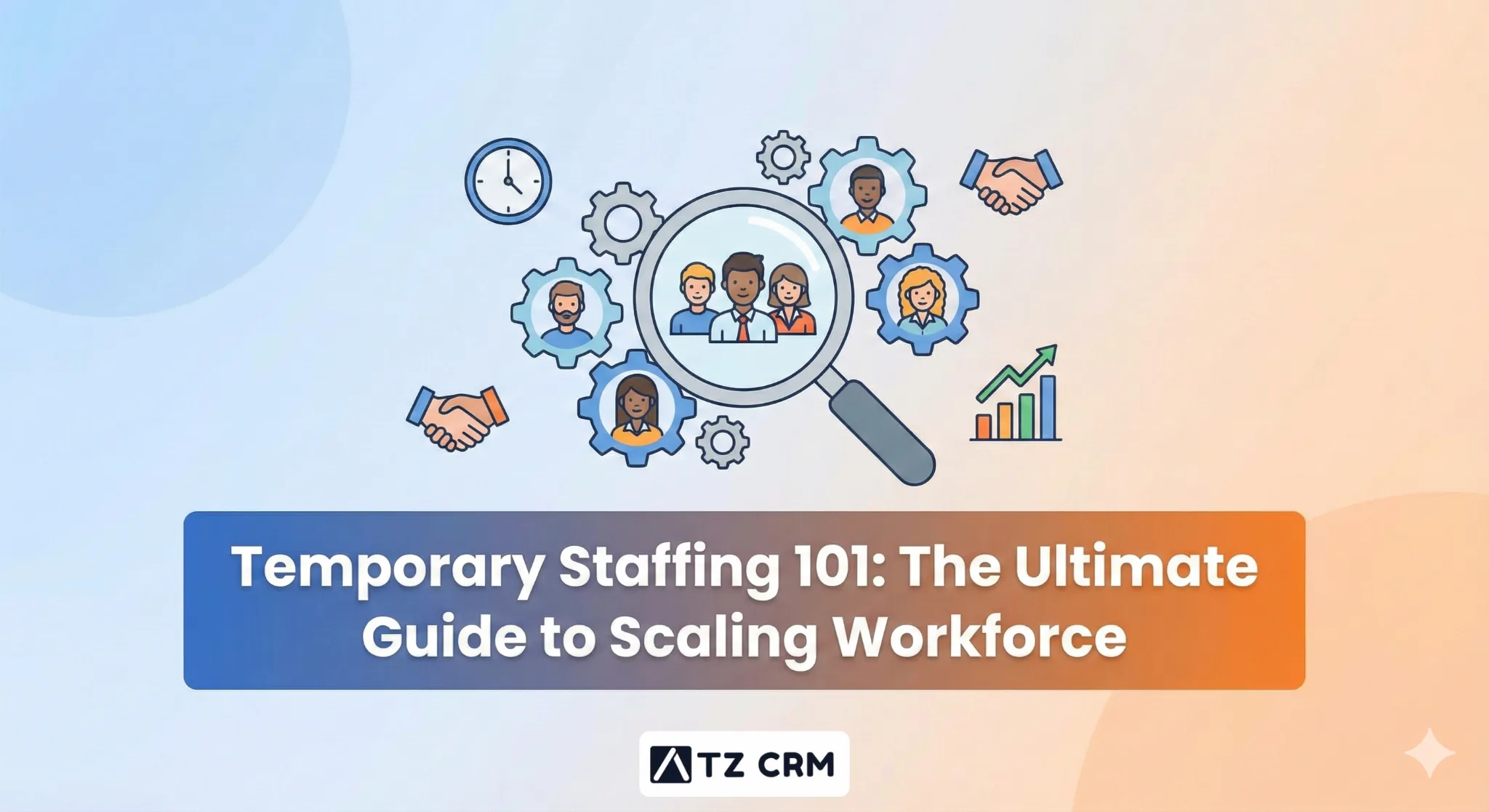
At its core, Temporary Staffing refers to the placement of workers into short-term roles where the agency remains the legal employer while the client directs day-to-day work. These assignments may last days, weeks, or several months, depending on business needs such as seasonal demand, project work, or workforce gaps. By 2025, the U.S. staffing industry is projected to expand by 5%, reaching an estimated value of $198.17 billion , driven largely by recovery and growth in sectors such as IT and healthcare.
Related Read: Top 10 Free ATS Tools to Supercharge Recruitment - ATZCRM
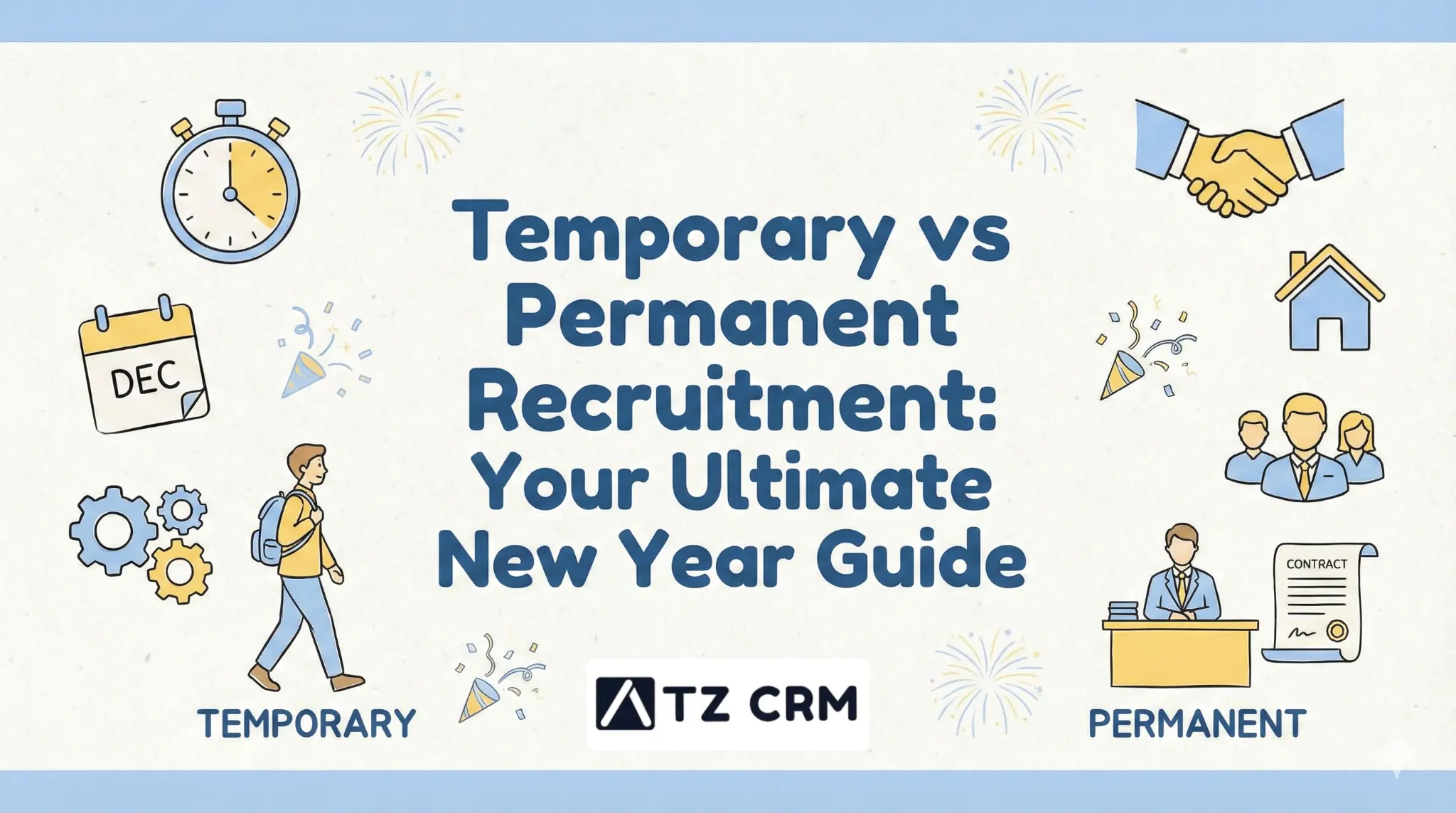
This model differs materially from permanent hiring, where the employer assumes full responsibility from day one, and from contract hiring, where professionals often operate independently or through third-party structures. The temporary model places the agency at the center of the employment relationship, responsible for payroll, statutory compliance, and continuity of supply. That positioning is what makes it both commercially attractive and operationally demanding.
Related Read: Steal These Free Recruiting Email Templates That Get Responses
How the Temporary Staffing Process Works
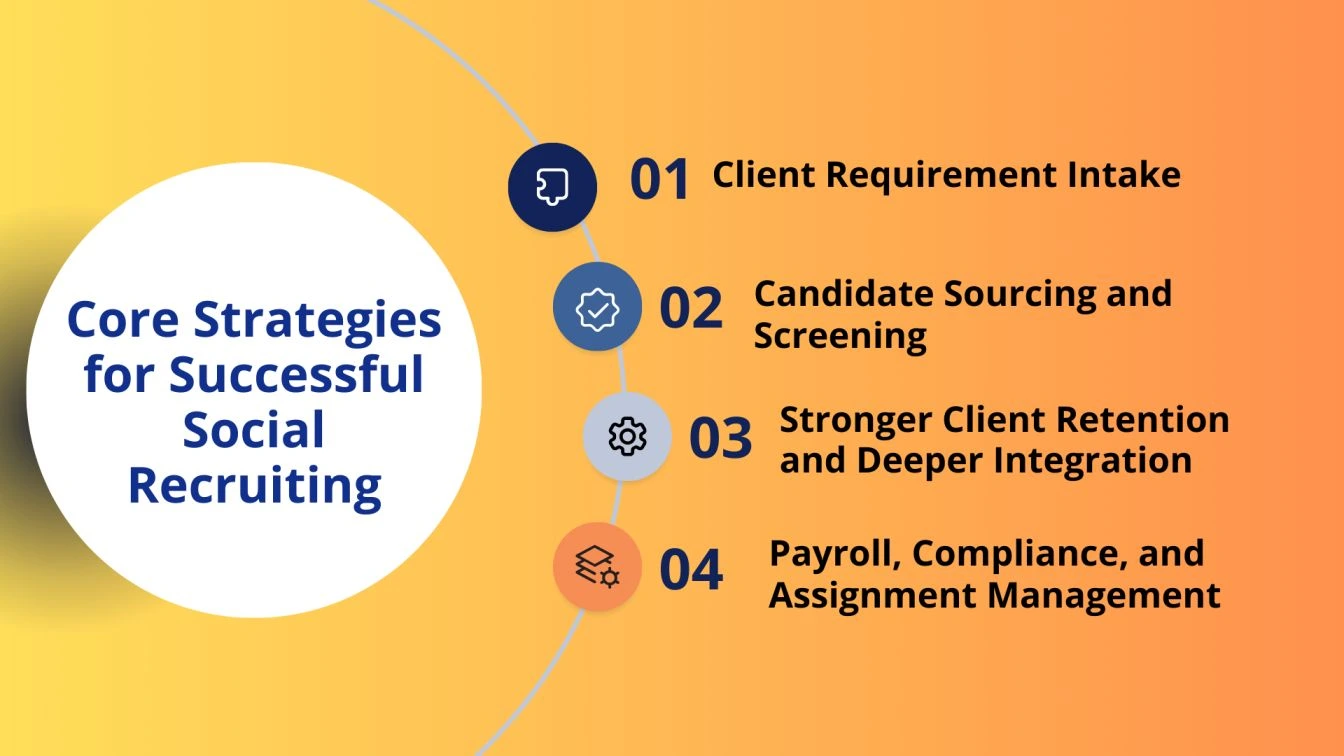
The success of any temporary hiring model depends on disciplined execution. While details vary by industry, most agencies follow a consistent operational flow.
Client Requirement Intake
Agencies begin by capturing precise workforce requirements. This includes role scope, shift patterns, assignment duration, compliance constraints, and replacement protocols. Unlike permanent roles, temporary placements demand clarity on availability, start times, and performance expectations because margins depend on speed and accuracy.
Related Read: 15 Free Job Posting Sites USA-Based Recruiters Can Use to Look for Diverse Talent
Candidate Sourcing and Screening
Talent pools for short-term roles are often pre-built and continuously refreshed. Recruiters prioritize availability, reliability, and compliance readiness over long interview cycles. Background checks, documentation, and skill verification are completed upfront to reduce friction during urgent requests, a critical element of Temporary Staffing delivery.
Related Read: Best RecruiterFlow Alternatives for Recruiting Firms
Placement and Onboarding
Once selected, workers are deployed quickly. Onboarding focuses on safety briefings, reporting structures, time-tracking processes, and assignment-specific expectations. The agency coordinates closely with the client to ensure the worker can be productive from the first shift.
Related Read: Diversity Recruiting Strategies and Expert Advice
Payroll, Compliance, and Assignment Management
During the assignment, agencies handle wage processing, statutory deductions, attendance validation, and issue resolution. Any absence or performance concern must be addressed immediately, often requiring same-day replacements. This operational responsibility is what distinguishes agencies that scale profitably from those that struggle.
Related Read: The Ultimate Recruit CRM Showdown: Best ATS Ranked
Challenges in Temporary Staffing and How Agencies Overcome Them
While operationally rewarding, Temporary Staffing presents a distinct set of execution and risk-management challenges that agencies must address proactively.
Managing compliance is one of the biggest operational challenges, as agencies must stay aligned with changing labor laws, wage regulations, and worker classifications across regions and industries.
Payroll processing becomes more complex due to variable shifts, overtime, frequent pay cycles, and the need for absolute accuracy to maintain worker trust.
Candidate availability can be unpredictable, especially during peak demand periods, making it difficult to ensure consistent fulfillment of client requirements.
High turnover among temporary workers increases the need for continuous sourcing, engagement, and redeployment efforts.
Client expectations are often immediate and non-negotiable, placing constant pressure on agencies to deliver replacements without disrupting business operations.
Coordinating multiple assignments simultaneously can strain internal teams if workflows and ownership are not clearly defined.
Maintaining service quality while scaling volumes requires disciplined processes rather than ad-hoc recruiter decisions.
Communication gaps between recruiters, payroll teams, and clients can quickly lead to errors or dissatisfaction if not tightly managed.
Visibility into active assignments, worker performance, and upcoming demand is essential to prevent last-minute firefighting.
Agencies that succeed treat Temporary Staffing as a structured operating model, not just a rapid-placement service.
Related Read: 8 Best ATS+CRM Loxo alternatives for Growing teams
Role of Technology in Temporary Staffing
Technology underpins scalable Temporary Staffing operations. Applicant tracking systems and CRM platforms help agencies manage candidate pipelines, assignment histories, and compliance documentation in one place. Automation reduces manual errors in scheduling, payroll inputs, and reporting. According to the American Staffing Association, 64% of staffing employees work in the industry to bridge employment gaps or support their transition into new roles.
Related Read: Customer Relationship Management 101: Everything Important You Need to Know in 2025
Data visibility also supports better decision-making, allowing agencies to forecast demand, monitor fill rates, and evaluate recruiter productivity. Platforms such as ATZ CRM are often used to coordinate candidate availability, track active assignments, and streamline recruiter workflows without disrupting day-to-day operations. A majority of respondents, 90% reported that staffing experience enhanced their employability.
Related Read: Recruitment Strategies for Agencies: Proven Tactics to Attract Better Candidates
Benefits of Temporary Staffing for Recruitment Agencies
Predictable and Recurring Revenue
Unlike one-time placement fees, Temporary Staffing generates ongoing income for agencies as long as assignments remain active. Weekly or monthly billings provide greater cash-flow stability and make revenue forecasting more reliable. This consistency allows agencies to plan growth, hiring, and operational investments with more confidence.
Related Read: 10 Best AI & ChatGPT Prompts Every Recruiter Should Be Using
Faster Hiring Cycles and Higher Placement Volume
Temporary roles prioritize availability and readiness over extended interview processes. This enables recruiters to close roles faster and handle a higher volume of placements within the same timeframe. Over time, agencies refine repeatable workflows that improve speed without sacrificing quality.
Stronger Client Retention and Deeper Integration
When agencies support clients with ongoing workforce needs, relationships shift from transactional to operational. Clients begin to rely on the agency for continuity and risk management, not just hiring. This dependency significantly improves retention and reduces the likelihood of vendor switching.
Related Read: Insider recruitment marketing strategies to boost your hiring game!
Workforce Scalability as a Core Value Proposition
Clients facing seasonal demand, project work, or sudden absenteeism value agencies that can scale teams up or down quickly. Temporary Staffing positions recruitment firms as flexibility partners who can respond to change without long-term commitments, making them essential to client operations.
Related Read: Top Recruitment CRM Solutions 2025: Improve Hiring Success
Improved Recruiter Productivity Over Time
As agencies build and reuse vetted talent pools, recruiters spend less time sourcing from scratch. Familiarity with recurring roles and candidates increases efficiency and reduces placement friction. This allows recruiters to focus on fulfillment and relationship management rather than constant pipeline rebuilding.
Related Read: Contract Staffing: The Ultimate Agency Playbook for Success in 2025
Reduced Business Risk Through Revenue Diversification
Relying solely on permanent placements concentrates risk around a few high-value hires. Temporary assignments spread revenue across multiple clients and roles, protecting agencies from sudden drops caused by hiring freezes or offer fallouts.
Related Read: 7 Simple Job Rejection Email Templates That Save Time
Best Practices for Running a Successful Temporary Staffing Model
Build and maintain an active talent pool rather than sourcing only when demand arises, ensuring faster response times and reduced fulfillment risk.
Prioritize availability, reliability, and compliance readiness during screening, as these factors matter more than extended interview cycles for short-term roles.
Standardize onboarding processes so every worker receives clear expectations around shifts, reporting, safety, and payment before the assignment begins.
Maintain consistent communication with temporary workers between assignments to improve retention and reduce drop-offs during urgent placements.
Set clear service expectations with clients upfront, including turnaround times, replacement policies, and escalation procedures.
Treat assignment monitoring as an ongoing responsibility, not a one-time placement, by checking attendance, performance, and satisfaction regularly.
Align recruiting, operations, and payroll teams around shared workflows to prevent handoff errors and missed follow-ups.
Use centralized systems to track assignments, availability, compliance documents, and pay data in real time.
Review fill rates, drop-off patterns, and client feedback frequently to identify operational gaps before they affect service quality.
Focus on repeatability and process discipline so growth is driven by systems and not dependent on individual recruiters.
Conclusion
For recruitment agencies, success in flexible hiring depends on far more than simply filling shifts at speed. It requires disciplined internal processes, clear ownership across stakeholders, and a strong grasp of the legal, payroll, and compliance responsibilities that sit with the agency. When these foundations are in place, Temporary Staffing moves beyond a reactive service and becomes a structured, repeatable operating model. Following the COVID-19 outbreak, the market recorded its most significant surge, rising by nearly 40% .
Agencies that execute this model well benefit from predictable revenue flows, deeper client integration, and stronger candidate loyalty. More importantly, they position themselves as workforce partners rather than transactional suppliers. As hiring patterns continue to favor flexibility and responsiveness, agencies that treat temporary hiring as a strategic capability supported by sound operations, technology, and relationship management will be better equipped to sustain growth and remain competitive in an increasingly demanding staffing market.
FAQs
How does temporary staffing work?
Temporary staffing works when a recruitment agency sources, screens, and hires workers, then places them with client companies for defined short-term roles. Tools like ATZ CRM help agencies track candidates and assignments efficiently.
What is the meaning of temporary staffing?
Temporary staffing means engaging workers through an agency for non-permanent assignments to meet fluctuating or short-term workforce needs. The agency remains the legal employer while the worker performs duties at the client’s site or project. A platform like ATZ CRM supports managing these temporary placements and worker data.
How does staffing help in recruiting people?
Staffing accelerates recruitment by providing employers with pre-qualified, job-ready candidates, reducing sourcing and screening time. With ATZ CRM, agencies can organize pipelines, track candidate history, and improve placement accuracy.
Blog Summary
Explains how temporary staffing works step-by-step from client intake and candidate sourcing to placement, compliance, and assignment management.
Defines key stakeholders in temporary staffing and highlights how agencies, employers, and workers interact throughout the process.
Breaks down the major benefits of temporary staffing for agencies, including revenue stability, faster placements, and stronger client retention.
Addresses common challenges in temporary staffing and how technology, such as ATZ CRM for managing candidate pipelines and assignments, can improve accuracy and recruiter productivity.
Offers best practices and forward-looking insights to help recruitment agencies build scalable, efficient, and competitive temporary staffing operations.