




Quick Answer
Permanent recruitment places a candidate into an ongoing role with the client company. The client becomes the employer, and the recruitment agency usually earns a one-time placement fee. Temporary recruitment supplies workers for short-term needs, often with the agency managing the employment relationship and billing the client by the hour, day, week, or assignment.
Fixed-term recruitment sits between the two. The worker is hired for a defined period, such as six months or one year, but the role is more structured than a short temp shift. Contract staffing is similar, though it is often used for specialist project work, professional services, IT, engineering, finance, healthcare, and consulting roles.
For HR teams and recruitment agencies, the best model depends on the goal: long-term retention, fast cover, budget control, project delivery, workforce flexibility, or a trial period before a permanent hire.
What Is Permanent Recruitment?
Permanent recruitment is the process of finding and hiring candidates for ongoing roles with no planned end date. In agency terms, this is often called direct hire, permanent placement, perm recruitment, or permanent recruiting.
The recruitment agency helps the client define the role, source candidates, screen applicants, coordinate interviews, manage feedback, support offer negotiation, and close the chosen candidate. Once the candidate accepts, they join the client company as an employee. The agency is not usually the employer of record for a permanent placement.
Permanent recruitment is commonly used for:
- Leadership and management roles
- Specialist professional roles
- Revenue-critical positions
- Roles with long-term training investment
- Jobs where company culture fit matters
- Hard-to-fill skill sets
- Roles where retention is more important than immediate availability
The main value of permanent recruitment is quality. Employers are not only buying sourcing help. They are paying for market knowledge, candidate evaluation, relationship management, and the ability to secure people who may not be actively applying.
Permanent Recruitment in the US: Direct Hire Basics
When people search for “permanent recruitment US,” they are usually looking for direct-hire recruitment services. In the US market, permanent recruitment normally means the client hires the candidate onto its own payroll as a W-2 employee. The recruitment agency earns a fee after the candidate accepts the offer, starts the job, or passes the agreed billing milestone.
A typical permanent recruitment fee is based on a percentage of the candidate’s first-year salary. The exact percentage depends on the market, role seniority, scarcity of talent, and whether the search is contingency, exclusive, or retained.
It is also important not to confuse permanent recruitment with PERM labor certification. PERM is a US immigration process. Permanent recruitment in staffing and HR usually means direct-hire recruiting for ongoing roles.
For agencies, US permanent recruiting is attractive because the placement fee can be large and the agency does not usually carry payroll risk. The tradeoff is that revenue can be uneven. A team may close several permanent placements in one month, then face a quieter period while longer searches move through interviews and offers.
What Is Temporary Recruitment?
Temporary recruitment is the process of supplying workers for short-term assignments. A temporary role may last a day, a week, a season, or several months. The client needs work completed, but does not necessarily want to create a permanent headcount.
Temporary recruitment is common when companies need:
- Absence cover
- Seasonal support
- Urgent operational help
- Event staffing
- Warehouse, logistics, retail, healthcare, or hospitality cover
- Project support
- Backfill while a permanent search is running
Unlike permanent recruitment, temporary staffing often continues after the worker starts. The agency may manage timesheets, assignment dates, worker communication, payroll coordination, compliance checks, replacements, and redeployment.
Temporary recruitment is faster and more operational. Recruiters need current candidate availability, ready talent pools, clear compliance records, and strong communication. A candidate who is perfect on paper but unavailable tomorrow is not useful for an urgent temp order.
What Is Fixed-Term Recruitment?
Fixed-term recruitment fills a role for a defined period. The contract has a clear end date or is tied to a specific project, maternity cover, funding period, or business need.
Fixed-term roles can look more like permanent roles than temp shifts. The worker may be embedded in the team, use internal systems, join meetings, and own meaningful responsibilities. The difference is that the employment relationship has a planned end point.
Fixed-term recruitment is often used for:
- Maternity or parental leave cover
- Long projects with defined dates
- Budget-limited roles
- Grant-funded positions
- Interim management
- Transformation projects
- Trial periods before permanent hiring
For HR teams, fixed-term hiring gives more structure than temporary staffing while avoiding a permanent headcount commitment. For candidates, it can offer a stable assignment, but with less long-term security than a permanent role.
Permanent vs Fixed-Term HR Recruitment Services Comparison
The query “permanent vs fixed-term HR recruitment services comparison” is useful because it shows a specific buyer question. HR teams are not only asking what the terms mean. They want to know which recruitment service to buy.
| Area | Permanent recruitment | Fixed-term recruitment |
|---|---|---|
| Role duration | Ongoing, no planned end date | Defined contract length or project end |
| Employer | Usually the client | Usually the client, though structures vary |
| Best for | Long-term roles, core hires, leadership, specialist employees | Project work, leave cover, interim roles, budget-limited needs |
| Recruitment priority | Quality, fit, retention, long-term potential | Availability, capability, project fit, contract commitment |
| Candidate motivation | Career growth, compensation, culture, stability | Project scope, rate or salary, flexibility, experience |
| Agency fee model | One-time placement fee | Placement fee, contract margin, or fixed project fee depending on service |
| Main risk | Bad hire, slow process, offer rejection, replacement guarantee | Contract ending too soon, candidate drop-off, unclear extension terms |
| HR workload | Onboarding and long-term employee management | Contract dates, extensions, renewal decisions, end-of-contract planning |
Permanent recruitment is better when the business needs a long-term employee who will grow with the company. Fixed-term recruitment is better when the business has a defined need and wants commitment for that period without creating a permanent role.
Temporary vs Permanent Recruitment: Key Differences
Temporary and permanent recruitment solve different workforce problems.
| Category | Temporary recruitment | Permanent recruitment |
|---|---|---|
| Main purpose | Fill short-term or urgent staffing needs | Hire long-term employees |
| Speed | Usually faster | Usually slower and more selective |
| Candidate pool | Available workers, contractors, temp talent pools | Active and passive long-term candidates |
| Employer relationship | Agency may be employer of record | Client usually employs candidate directly |
| Revenue model for agency | Recurring margin, pay/bill spread, or contract billing | One-time placement fee |
| Client goal | Flexibility, speed, continuity, cover | Retention, capability, growth, culture fit |
| Recruiter workflow | High-volume sourcing, availability checks, fast submissions | Search strategy, screening depth, interview process, offer close |
| Post-start work | Ongoing assignment management | Follow-up, guarantee period, relationship management |
Permanent recruitment is a quality and fit game. Temporary recruitment is a speed, availability, and operations game. A strong agency can do both, but the workflows should not be treated as identical.
Temporary vs Fixed-Term vs Contract vs Permanent
Many HR teams use these terms loosely, so it helps to compare all four models together.
| Hiring model | Plain-English meaning | Best use case |
|---|---|---|
| Permanent recruitment | Hiring someone into an ongoing employee role | Core long-term roles and leadership hires |
| Fixed-term recruitment | Hiring someone for a defined period | Leave cover, projects, interim roles |
| Temporary recruitment | Supplying workers for short-term or urgent needs | Seasonal demand, absence cover, shift-based roles |
| Contract staffing | Supplying specialist workers for project or time-bound work | IT, engineering, finance, consulting, professional services |
The key difference is not only contract length. It is the level of commitment, who employs the worker, how the agency earns revenue, and how much post-placement management is required.
When Permanent Recruitment Is the Right Choice
Permanent recruitment is usually the best choice when the role is central to the company’s future. If the hire will own client relationships, lead a team, build institutional knowledge, or shape long-term outcomes, a permanent search makes sense.
Choose permanent recruitment when:
- The role is part of the long-term org chart.
- Retention matters more than immediate start date.
- The business needs leadership or specialist expertise.
- The candidate will manage people, clients, budgets, or strategy.
- Culture fit and career motivation are important.
- The hiring manager is willing to invest time in a fuller selection process.
Permanent recruitment also works well when the talent market is competitive. Passive candidates may not apply to public job ads, but a recruiter can approach them directly, explain the opportunity, and manage the relationship through the process.
For agencies, permanent recruitment requires consultative selling. Recruiters need to understand the role deeply, qualify the client properly, manage expectations, and protect candidate experience. A rushed permanent search often creates offer rejection, weak shortlists, or early turnover.
When Temporary or Fixed-Term Recruitment Is the Better Fit
Temporary and fixed-term recruitment are better when the business need is time-sensitive, uncertain, seasonal, or project-based.
Temporary recruitment is the better fit when:
- The client needs cover immediately.
- The role is shift-based or high volume.
- Demand may disappear after a peak period.
- The client needs flexible workforce capacity.
- The agency has ready workers available.
Fixed-term recruitment is the better fit when:
- The assignment has a defined duration.
- The role needs more commitment than casual temp work.
- The business has project funding for a set period.
- The client needs maternity, parental, or long absence cover.
- The client wants to test a role before making it permanent.
This is where a good HR recruitment services comparison becomes practical. The right model should match the business problem, not the recruiter’s favorite fee structure.
Permanent Recruitment Process: Step by Step
A strong permanent recruitment process is structured but not slow for the sake of it. The goal is to improve quality while keeping candidate momentum.
1. Role Intake
The recruiter clarifies the job title, business need, reporting line, salary range, location, work model, must-have skills, nice-to-have skills, interview process, decision makers, and selling points.
This stage is critical. A vague brief leads to mismatched candidates. A clear intake creates a sharper search strategy.
2. Search Strategy
Permanent recruiting often combines database search, job ads, referrals, LinkedIn outreach, talent mapping, and passive candidate sourcing. The best strategy depends on role seniority, scarcity, location, and salary competitiveness.
3. Candidate Screening
Screening should cover skills, experience, motivation, compensation expectations, notice period, work authorization, location fit, and long-term career goals. Permanent recruitment is not only about whether someone can do the job. It is about whether they are likely to stay and succeed.
4. Shortlist and Submission
The agency submits a focused shortlist, not a resume dump. Each profile should explain why the candidate fits the role, what they are looking for, compensation expectations, and any risks the client should understand early.
5. Interview Management
Permanent hiring usually involves multiple interviews. Recruiters coordinate schedules, prepare candidates, collect feedback, keep the client moving, and prevent the process from going quiet.
6. Offer and Close
The offer stage is where many permanent placements are won or lost. Recruiters need to manage salary expectations, competing offers, resignation concerns, notice periods, counteroffers, and start-date planning.
7. Post-Placement Follow-Up
Even after the candidate starts, the agency should follow up with both client and candidate. This protects the relationship and helps identify early issues during any guarantee or replacement period.
What Permanent Recruitment Agencies Do for Clients
Permanent recruitment agencies bring more than resumes. A strong agency helps the client make better hiring decisions and reduces the time wasted on weak applicants.
Common services include:
- Job briefing and role calibration
- Salary and market feedback
- Candidate sourcing
- Passive candidate outreach
- Screening and qualification
- Shortlist creation
- Interview coordination
- Candidate feedback management
- Offer negotiation
- Counteroffer management
- Post-placement follow-up
For US permanent recruitment, agencies may specialize by market, such as healthcare, IT, sales, accounting, executive search, logistics, manufacturing, or professional services. A specialist agency can often reach candidates faster because it already has relevant networks and talent pools.
Cost and Revenue Differences for Recruitment Agencies
The economics of permanent and temporary recruitment are very different.
Permanent recruitment typically creates one larger fee when a placement is made. The agency does not usually pay the worker. That means lower payroll risk, but revenue can be unpredictable.
Temporary recruitment usually creates smaller recurring revenue over time. The agency may pay workers weekly or biweekly and bill clients later. That can produce stronger recurring revenue, but it also requires cash-flow discipline.
Fixed-term and contract recruitment can sit between these models. Some agencies charge a placement fee. Others earn margin over the contract period. The commercial model should be clear before the search begins.
For agency owners, the strongest model is often a balanced one:
- Permanent recruitment creates high-value placement fees.
- Temporary recruitment creates recurring revenue.
- Fixed-term recruitment fills project and interim demand.
- Contract staffing creates specialist revenue streams.
The risk is operational complexity. Different models need different workflows, contracts, compliance checks, and reporting.
The Role of Technology: Why ATZ CRM Helps
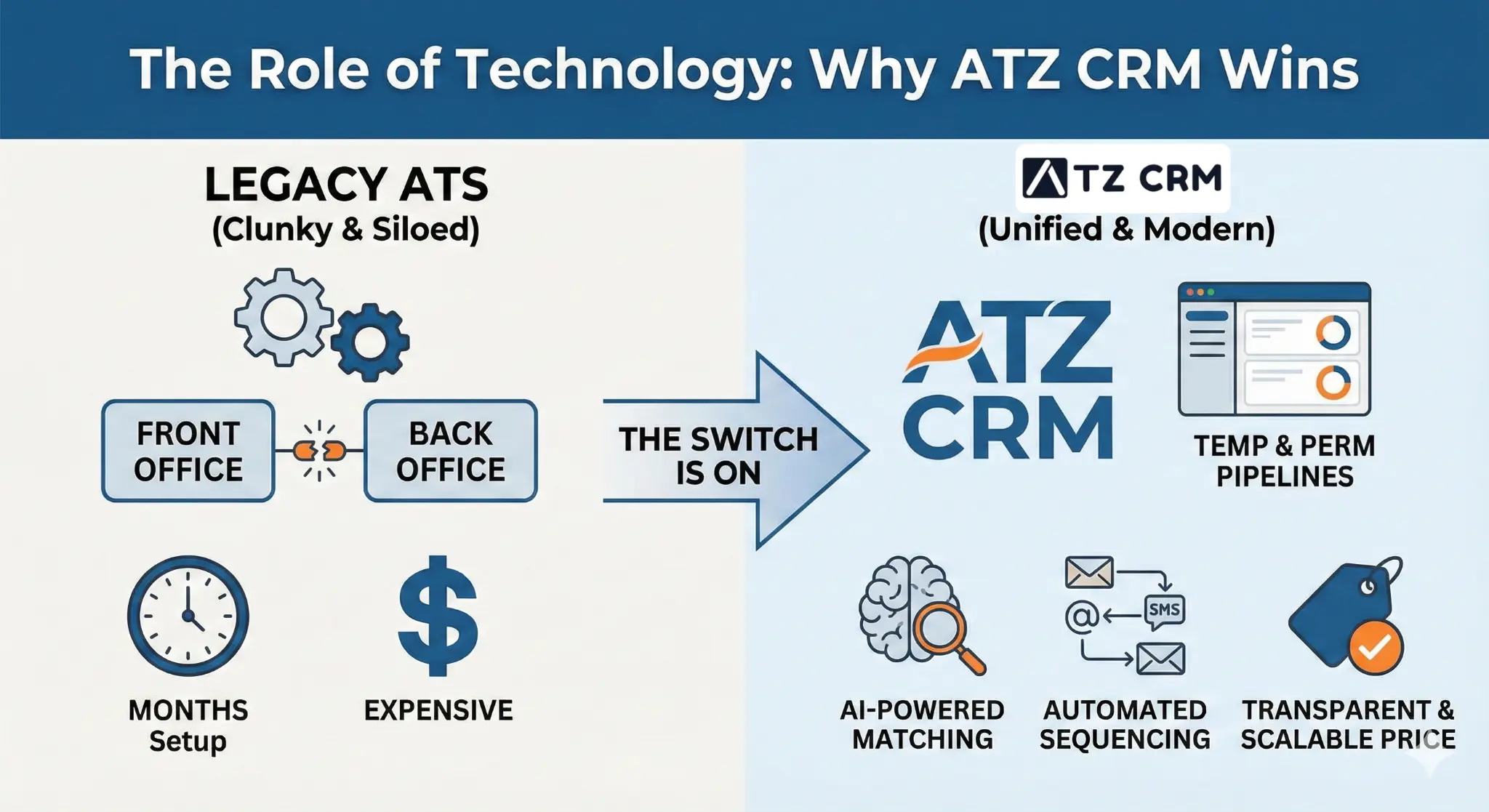
Recruitment teams often struggle when permanent, temporary, fixed-term, and contract workflows live in different spreadsheets or disconnected tools. Candidate history gets lost. Client conversations are hard to track. Recruiters duplicate outreach. Managers cannot see which jobs are close to being filled.
ATZ CRM helps recruitment agencies manage candidate relationships, client conversations, job pipelines, outreach, submissions, placements, and reporting from one workspace. That matters when an agency offers multiple HR recruitment services.
For permanent recruitment, a CRM and ATS should support:
- Client and hiring manager records
- Job intake and pipeline stages
- Candidate sourcing and tagging
- Outreach sequences
- Interview coordination
- Submission tracking
- Offer and placement visibility
- Follow-up reminders
- Reporting by recruiter, source, client, and role
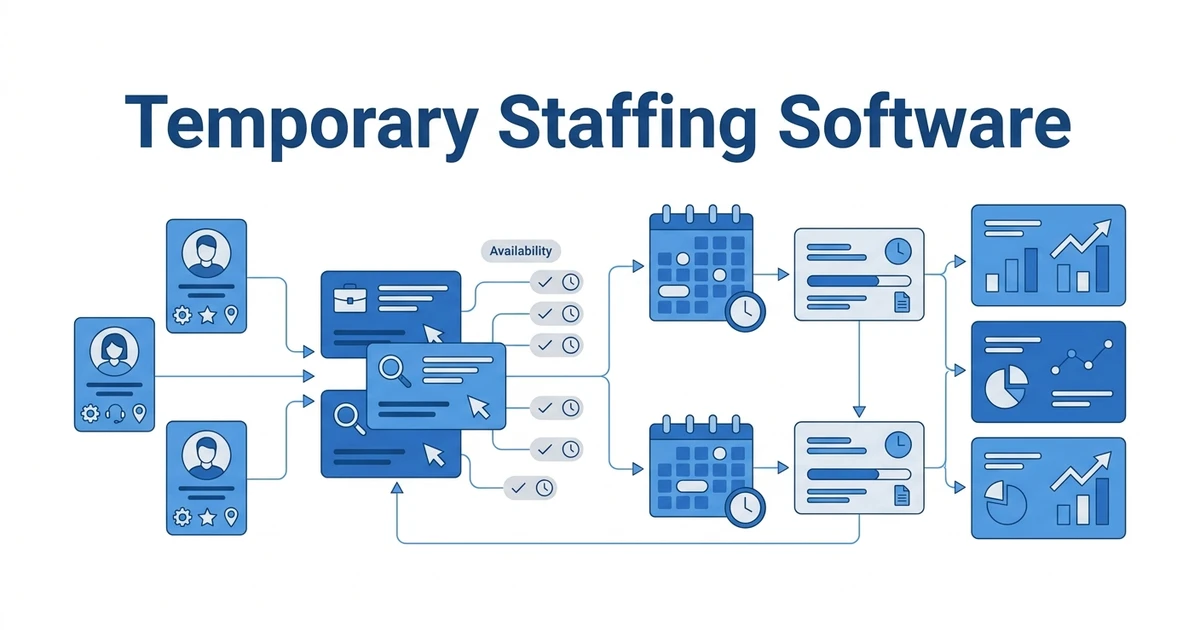
For temporary and fixed-term recruitment, the system also needs to support availability, assignment dates, faster outreach, placement tracking, and redeployment. Explore the dedicated permanent placement software and temporary staffing software pages if you want to see how these workflows split in practice.
How to Choose the Right Recruitment Service
Use this decision framework before deciding between permanent, fixed-term, temporary, or contract recruitment.
Choose Permanent Recruitment If
- The role is long-term and core to the business.
- The hire will own strategic, client-facing, or leadership responsibilities.
- Retention and culture fit matter.
- The company can wait for a thorough search.
- The budget supports a direct-hire agency fee.
Choose Fixed-Term Recruitment If
- The business need has a clear end date.
- The role needs more commitment than short temp work.
- The team needs continuity during leave or a project.
- The company is not ready to commit permanent headcount.
- The candidate can realistically complete the agreed term.
Choose Temporary Recruitment If
- The need is urgent.
- The role is shift-based or seasonal.
- The company needs flexible labor.
- The agency can supply pre-vetted workers quickly.
- Ongoing assignment management is expected.
Choose Contract Staffing If
- The role requires specialist project expertise.
- The business needs delivery for a defined scope.
- The candidate market expects contract rates.
- The client wants flexibility without a permanent hire.
- The agency can manage contract compliance and extensions.
Common Mistakes in Comparing Recruitment Models
Many companies and agencies compare recruitment models too narrowly. They look only at upfront cost, speed, or fee percentage. That misses the bigger picture.
Avoid these mistakes:
- Choosing temporary recruitment for a role that needs long-term ownership.
- Choosing permanent recruitment when the need is only seasonal.
- Treating fixed-term roles like casual temp work.
- Assuming the cheapest agency fee produces the lowest total cost.
- Running a permanent search without salary alignment.
- Starting a temp order without confirming availability and compliance.
- Using separate systems for each recruitment model.
- Ignoring candidate experience during long interview processes.
- Forgetting to plan conversion fees for temp-to-perm hires.
The right model should reduce risk, not just reduce visible cost.
Can One Agency Offer All Models?
Yes. In fact, many clients prefer one agency that can support multiple hiring needs. A client may need permanent recruitment for a sales director, fixed-term recruitment for maternity cover, temporary staffing for seasonal demand, and contract staffing for an IT implementation.
The advantage for the agency is deeper client ownership. Instead of being called only for one type of hire, the agency becomes a workforce partner.
The challenge is process design. A dual-desk or multi-service agency needs clear pipelines, contract templates, candidate segmentation, client notes, compliance visibility, and reporting. Without that structure, recruiters can lose track of which candidates are right for which type of work.
This is why a shared ATS and CRM matters. The candidate who is not right for a permanent role today may be perfect for a fixed-term project later. The temp worker who performs well may become a permanent hire. The client who starts with one contract role may expand into a full hiring partnership.
Conclusion
Permanent recruitment, temporary recruitment, fixed-term recruitment, and contract staffing all solve different hiring problems. Permanent recruitment is best for long-term employees and strategic roles. Temporary recruitment is best for urgent, flexible workforce needs. Fixed-term recruitment is useful when the role has a defined end date but still needs stability. Contract staffing is ideal for specialist project work.
The main improvement is not simply knowing the definitions. It is matching the recruitment service to the client’s actual workforce need. A permanent vs fixed-term HR recruitment services comparison should consider duration, urgency, cost, employer responsibility, candidate motivation, compliance, and long-term business value.
For recruitment agencies, the strongest position is often to offer more than one model with the right systems behind it. With ATZ CRM, agencies can keep candidate history, client relationships, job pipelines, submissions, placements, and follow-up activity connected across permanent, temporary, fixed-term, and contract workflows.
Ready to manage permanent and flexible recruitment workflows in one place? Book a demo and see how ATZ CRM helps agencies organize candidates, clients, jobs, and placements.
Frequently Asked Questions
What is permanent recruitment?
Permanent recruitment is the process of hiring a candidate into an ongoing role with the client company. The client employs the candidate directly, and the recruitment agency usually earns a one-time placement fee.
What is permanent recruiting?
Permanent recruiting is another term for permanent recruitment. It refers to sourcing, screening, interviewing, and placing candidates into long-term employee roles rather than short-term temporary assignments.
How does permanent recruitment work in the US?
In the US, permanent recruitment usually works as direct hire. The agency sources and screens candidates, the client hires the chosen person onto its payroll, and the agency charges a placement fee based on the agreed terms.
What is the difference between permanent and fixed-term recruitment?
Permanent recruitment fills ongoing roles with no planned end date. Fixed-term recruitment fills roles for a defined period, such as a project, leave cover, interim role, or budget-limited assignment.
Is temporary or permanent recruitment better for agencies?
Permanent recruitment can generate larger one-time fees with lower payroll risk. Temporary recruitment can create recurring revenue but requires more operational management. Many agencies use both models to balance revenue and serve more client needs.
Do agencies need different software for permanent and temporary recruitment?
Agencies do not always need separate software, but they do need workflows that support both models. Permanent recruitment needs search, interview, offer, and placement tracking. Temporary recruitment also needs availability, assignment, compliance, and redeployment visibility.