EN
 DE
 ES
 FR
 NL
 PT
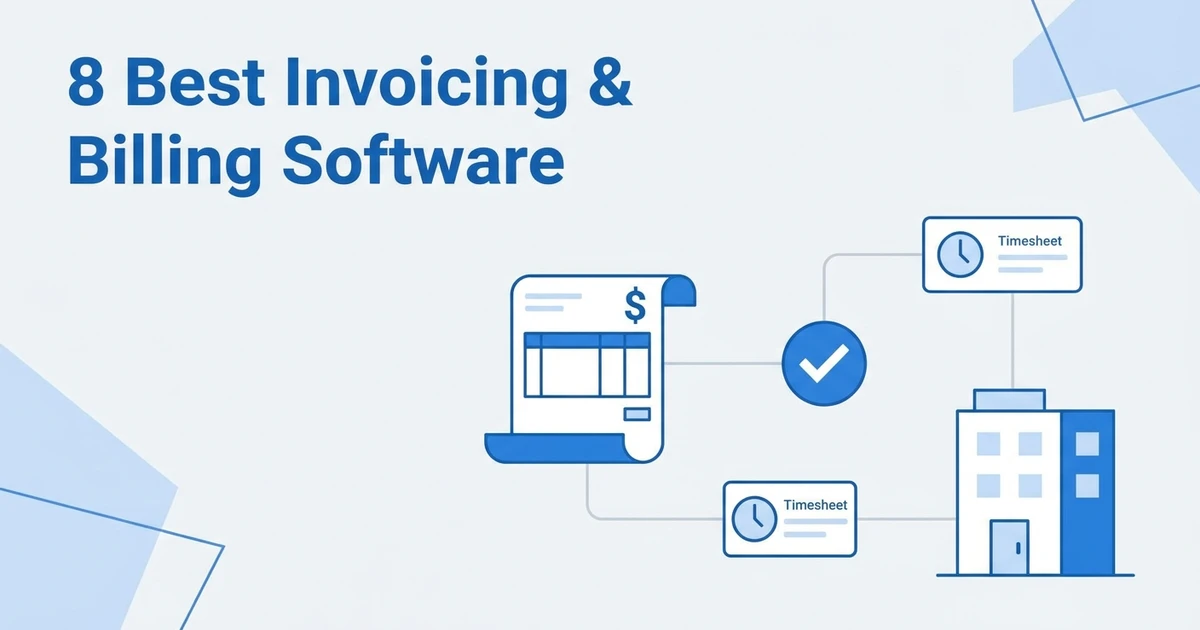


Quick Answer: The best staffing agency invoicing software automates invoice generation from approved timesheets, applies client-specific billing rules without manual recalculation, and gives you a clear view of what’s outstanding. Decide first whether your agency needs full payroll and pay-and-bill automation or whether invoicing connected to your existing ATS and CRM is enough, since that choice determines which category of tool actually fits.
A placement closes, the contractor starts, and three weeks later someone on your team is still rebuilding the same invoice in a spreadsheet because the hours, the markup, and the client’s billing format all live in different places. That gap is where staffing agencies lose margin they already earned.
This guide compares 8 invoicing and billing tools built for staffing agencies, from lightweight options to full pay-and-bill platforms, plus a practical way to decide whether you need a new tool at all.
Why Invoicing Breaks Down for Growing Staffing Agencies
Invoicing problems rarely show up when an agency is small. One recruiter, a handful of clients, and a simple markup formula are easy to manage by hand. The trouble starts once you add contract placements, multiple pay rates, and clients who each want their invoices formatted differently.
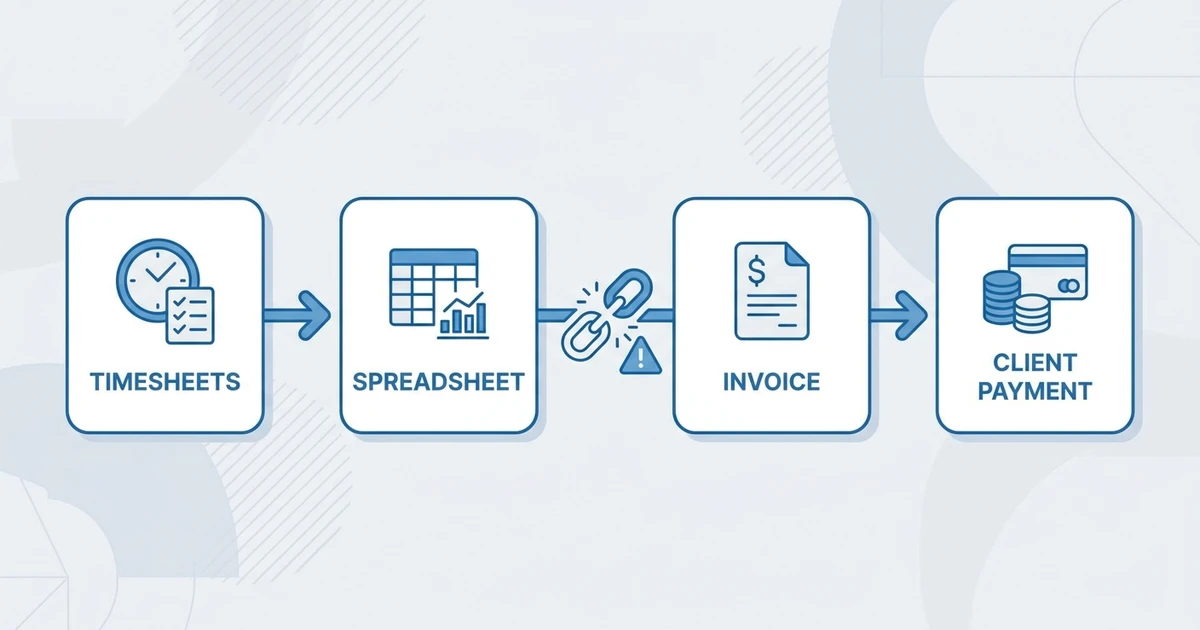
At that point, the work splits across systems that don’t talk to each other. Timesheets live in one place, candidate and client records live in your ATS or CRM, and the actual invoice gets built manually by someone cross-referencing both. Every added client or pay structure adds another manual step, not a scalable one.
The US staffing industry is forecast to reach roughly $180 billion in 2026, according to Staffing Industry Analysts data. A meaningful share of that revenue runs through contract and temporary placements, which are exactly the business lines where billing complexity compounds fastest, since every contractor can carry a different pay rate, bill rate, and client-specific invoice format.
The cost of staying manual is measurable, even outside staffing specifically. Ardent Partners’ 2025 research on accounts payable metrics found that the average manual invoice costs $9.40 to process, compared to $2.78 for best-in-class automated teams, and that best-in-class processing takes 3.1 days versus 17.4 days for manual teams. Invoicing on the staffing side carries the same automation gap, just with timesheets and margins added on top.
None of this means every agency needs a full back-office platform immediately. It means the real question isn’t whether to automate, it’s which layer of your workflow, front-office or back-office, should own invoicing first.
There’s also a client-trust cost that’s harder to put a number on. A client who gets an invoice with the wrong hours, the wrong rate, or a billing format that doesn’t match what their accounts payable team expects will question your agency’s accuracy on everything else, not just the invoice. Billing mistakes tend to get noticed faster than almost any other part of the relationship, because someone on the client side is specifically checking the math.
The Staffing Agency Invoicing Checklist: What to Look for Before You Buy
Before comparing specific tools, get clear on what your agency’s invoicing workflow actually needs to do today, not in some future state with triple the headcount.
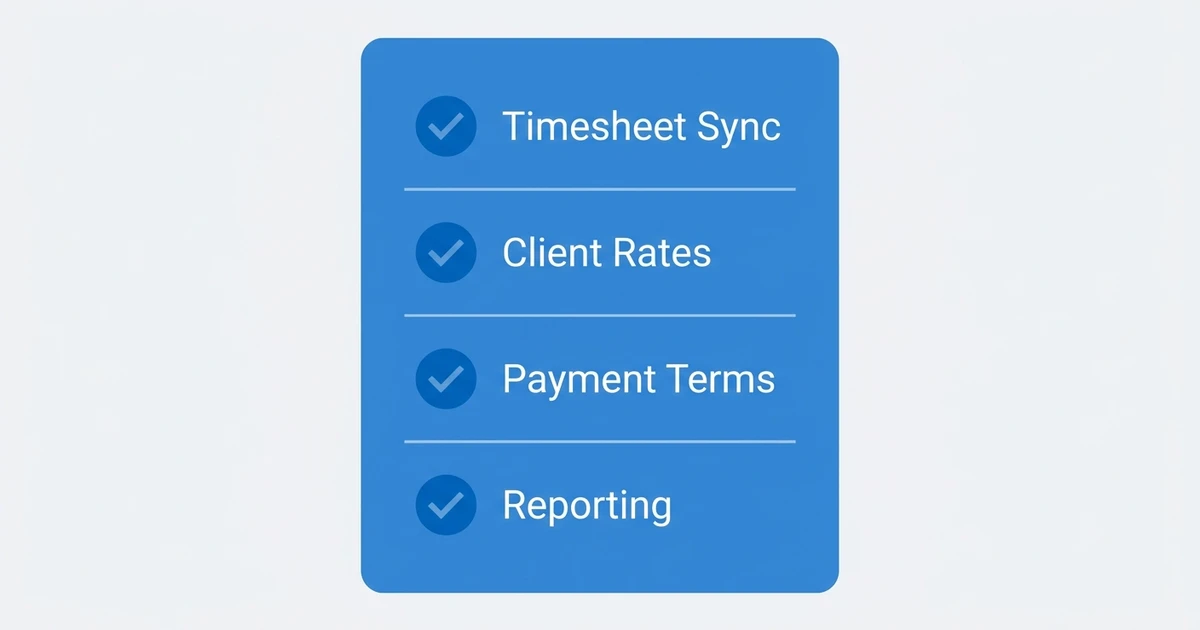
Work through this checklist:
- Timesheet-to-invoice automation: Does an approved timesheet generate an invoice automatically, or does someone rebuild it by hand?
- Client-specific billing rules: Can you set different markups, formats, or terms per client without a manual workaround each time?
- Margin visibility: Can you see pay rate versus bill rate at a glance, or do you need a separate spreadsheet to check margin?
- Payroll and tax complexity: Does your agency need multi-state payroll and tax handling built in, or is that handled by a separate payroll provider already?
- Integration with your ATS/CRM: Will invoicing data connect to the system where you track candidates and clients, or live in a disconnected tool you have to update twice?
Agencies that are mostly direct-hire with occasional contract placements usually need far less invoicing complexity than agencies running a high-volume temp desk. Be honest about which one you actually are before you shop.
It’s worth running this checklist against your last three months of actual invoices, not a hypothetical future state. Count how many required a manual correction, how many went out late because someone was waiting on timesheet approval, and how many clients asked for a format change you had to build by hand. Those three numbers tell you more about what you need than any vendor’s feature comparison page.
The 8 Best Invoicing & Billing Software for Staffing Agencies
Pricing below reflects figures reported at the time of writing, much of it through third-party buyer guides since several of these vendors use custom, quote-based pricing. Confirm current rates directly with each vendor before budgeting.
1. ATZ CRM
ATZ CRM includes invoice management and billing directly inside its CRM, so invoicing lives next to the same candidate, client, and placement records your recruiters already update. There’s no second login and no re-entering client details that already exist in your pipeline.
Pricing starts at $12 per user per month on the Pro plan, with the Business plan at $24 per user per month adding a complete reporting suite, scaling to $60 on Enterprise. The main watch-out is payroll depth: agencies that need full multi-state payroll processing or complex pay-and-bill automation should confirm whether ATZ CRM’s billing covers their specific workflow or whether it should sit alongside a dedicated payroll system instead.
2. TempWorks
TempWorks is a front-and-back-office staffing platform with payroll, invoicing, accounts receivable, and W-2 management built in alongside its ATS and CRM. Its automated invoice generation ties directly to approved timesheets, and it includes worker self-service portals and compliance tracking for multi-state temp operations.
Reported pricing runs roughly $80 to $130 per user per month according to third-party buyer guides, with implementation fees on top and custom quotes common. It’s a strong fit for agencies running meaningful temp or contract volume that need payroll and billing handled by the same vendor as their front office.
3. AkkenCloud
AkkenCloud combines ATS and CRM functionality with an accounting system that lets agencies customize billing to each client’s specific requirements, manage multi-level commissions, and run in-house payroll in several configurations. Built-in reporting covers sales, jobs, and billing and invoicing metrics in one place.
Reported starting price is around $89.99 per month for a basic single-user module, scaling to roughly $1,299 to $2,499 per month for a 10-user setup per third-party pricing trackers. Confirm which billing and commission features are included at your actual seat count before assuming parity with the full feature list.
See how ATZ CRM keeps invoice management and billing connected to your candidate pipeline, client records, and placement history in one system. See pricing and compare the real cost against running a separate invoicing tool alongside your current ATS and CRM.
4. COATS Staffing Software
COATS pairs applicant tracking and candidate management with billing and invoicing and a built-in CRM, aimed at staffing agencies that want those functions in one system without a separate accounting tool bolted on.
Detailed public pricing isn’t published, so budget for a custom quote conversation. It’s worth evaluating if your agency wants billing and recruiting workflows in a single, staffing-specific system without the scale or complexity of an enterprise platform.
Ask for references from agencies close to your own size during the sales process, since staffing-specific platforms at this tier often vary more in support quality and implementation speed than in raw feature count.
5. Avionte
Avionte is an operations-heavy platform often evaluated by staffing firms with high-volume temp and contract placement needs, with billing and invoicing built into its broader workforce management suite.
It does not publish pricing, using a custom quote based on agency size, modules, and transaction volume, and third-party estimates suggest implementation costs can run from $5,000 to $20,000 or more depending on scope. It’s a reasonable fit if your bottleneck is operational scale across a large contingent workforce, not just invoice generation.
Budget time for implementation, not just cost. Platforms at this scale typically take weeks to months to configure properly across pay rates, client rules, and compliance settings, so factor that timeline into any decision tied to a specific growth deadline.
6. Bullhorn One (Pay & Bill)
Bullhorn’s back-office product line, Bullhorn One, extends its core ATS/CRM into a front-to-back-office suite covering onboarding, time and expense capture, invoicing, and payroll integration, with a dedicated Pay & Bill solution for processing time into pay and bill calculations.
Pricing is not published and requires a custom enterprise quote. It fits larger staffing operations already invested in the Bullhorn ecosystem that want one vendor handling recruiting through invoicing, but the tradeoff is the same complexity and implementation weight that comes with any enterprise staffing suite.
Smaller agencies evaluating Bullhorn One specifically for billing, without an existing Bullhorn ATS/CRM investment, should weigh whether the full front-to-back-office switch is worth it compared to adding billing to a lighter system already in place.
7. Journyx
Journyx is a time, project cost, and billing platform with payroll and billing integrations, built primarily for mid-market and enterprise organizations with 100 to 2,000 or more employees across professional services, IT, consulting, and government contracting.
Published tiers run around $5 per user per month for time and attendance and $13 per user per month for project time and billing, though real costs scale with users and features. It’s worth a look if your agency’s billing complexity resembles a professional services firm more than a traditional staffing desk, but confirm it fits a staffing-specific workflow before committing, since it isn’t built staffing-first.
8. QuickBooks Online + QuickBooks Time
QuickBooks Online is general accounting software, not a staffing platform, but paired with QuickBooks Time it covers a surprising amount of staffing-relevant ground: approved hours flow into QuickBooks Payroll and Online without manual exports, job codes map to customers and classes, and invoicing pulls directly from the same timesheets.
QuickBooks Online’s entry plan runs roughly $35 to $38 per month, and QuickBooks Time Premium costs $10 per user per month plus a $20 monthly base fee, with an Elite tier at $40 per month plus $12 per user. It’s a reasonable starting point for a small agency that doesn’t yet need staffing-specific pay-and-bill depth, but expect to outgrow it as client-specific billing rules and multi-state compliance get more complex.
The combination works well right up until a client asks for a billing format or markup structure QuickBooks wasn’t built to handle. At that point, the question isn’t whether QuickBooks is a bad product, it’s whether general accounting software was ever meant to carry staffing-specific billing logic in the first place.
Staffing Agency Invoicing Software Comparison Table
| Tool | Best for | Pricing | Timesheet-to-invoice automation | Payroll included |
|---|---|---|---|---|
| ATZ CRM | Invoicing connected to ATS+CRM | $12-$60/user/mo | Yes | No |
| TempWorks | Front-and-back-office staffing | ~$80-130/user/mo | Yes | Yes |
| AkkenCloud | Customizable client billing | From ~$90/mo, scales with seats | Yes | Yes |
| COATS | Billing + CRM in one system | Custom quote | Yes | Limited |
| Avionte | High-volume contingent workforce | Custom quote only | Yes | Yes |
| Bullhorn One (Pay & Bill) | Enterprise staffing ecosystem | Custom quote only | Yes | Yes |
| Journyx | Professional-services-style billing | ~$5-13/user/mo | Yes | Via integration |
| QuickBooks Online + Time | Small agencies starting out | ~$35-38/mo plus time add-on | Yes | Via QuickBooks Payroll |
Standalone Invoicing Tool or Built-In Billing Inside Your ATS+CRM?
A standalone invoicing or pay-and-bill platform makes sense once payroll complexity, multi-state tax rules, or contingent workforce volume becomes the actual bottleneck. At that point, the depth of a dedicated system is worth the extra vendor relationship and the cost of keeping two systems in sync.
For a lot of smaller and mid-size agencies, though, the real cost isn’t a missing feature. It’s the time spent re-entering the same client and placement details into a second system that doesn’t talk to the ATS or CRM where that data already lives. Every manual sync is a chance for a billing rate to drift out of date.
That’s the case for keeping invoicing inside the same platform where you manage candidates and clients, at least until your agency’s complexity genuinely outgrows it. A missed rate update inside one connected system is a quick fix. The same mistake split across two disconnected systems can mean a wrong invoice going out to a client before anyone notices.
A reasonable test: track how many hours your team spends each month reconciling invoicing data against your ATS or CRM records. If that number is small, a connected, built-in approach is probably enough. If it’s climbing every quarter, that’s the signal to evaluate a dedicated platform before it becomes a full-time job for someone on your team.
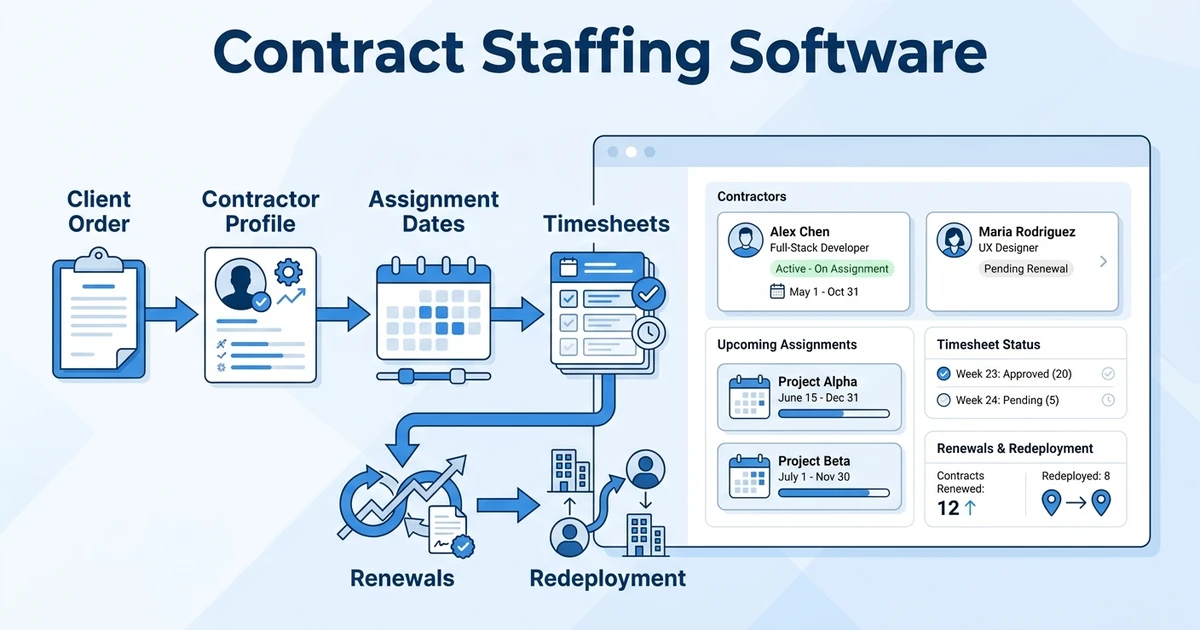
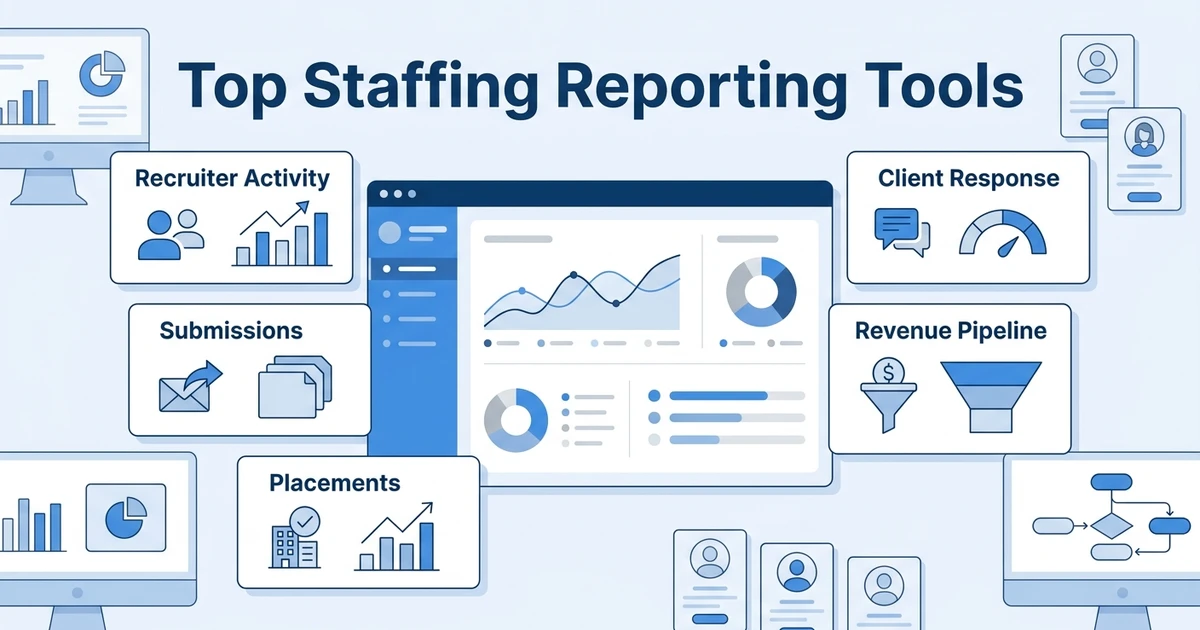
If your agency’s reporting needs go beyond invoicing specifically, pair this comparison with our guide to staffing agency reporting tools and our breakdown of contract staffing software, which covers the broader front-office workflow invoicing sits inside of. ATZ CRM’s staffing agency reporting tools extend that same connected-data approach to forecasting, not just billing.
Frequently Asked Questions
What is the best staffing agency invoicing software?
There is no single best staffing agency invoicing software for every firm. TempWorks and Bullhorn One fit agencies that need deep pay-and-bill automation, AkkenCloud and COATS fit mid-size agencies that want billing built into their core system, and ATZ CRM fits agencies that want invoicing connected directly to their candidate and client pipeline instead of a separate back-office tool.
How much does staffing agency invoicing software cost?
Pricing varies widely. Lighter tools like QuickBooks Online start around 35 to 40 dollars a month plus add-ons for time tracking, mid-market staffing platforms like TempWorks and AkkenCloud commonly run 80 to 130 dollars per user per month, and enterprise platforms like Bullhorn One and Avionte use custom quotes based on agency size and modules.
Do I need separate invoicing software if I already have an ATS and CRM?
Not always. If your ATS and CRM already include invoice management and billing, like ATZ CRM does, you may only need a separate tool once your agency’s pay-and-bill volume, multi-state tax complexity, or payroll processing outgrows what a front-office system is built to handle.
What features should staffing agencies look for in invoicing software?
Look for automated invoice generation tied to approved timesheets, client-specific billing rules, margin and markup visibility, integration with your ATS or CRM, and clear reporting on outstanding receivables. Confirm whether payroll and tax compliance are included or require a separate system.
Is ATZ CRM a good fit for staffing agency billing and invoicing?
Yes, for agencies that want invoice management and billing connected directly to the same system where they manage candidates, clients, and placements. It is less of a fit for agencies that need full payroll processing, multi-state tax compliance, or complex pay-and-bill automation built into the same platform.
Conclusion
The right invoicing setup for your staffing agency depends on how much payroll and pay-and-bill complexity you’re actually managing today, not how much a vendor’s feature list promises for the future. Match the tool to that complexity instead of the longest back-office checklist.
If the real problem is a billing system that doesn’t talk to your candidate and client records, book an ATZ CRM demo and walk through your current invoicing process to see what connecting it would actually save you.