 EN
EN DE
DE ES
ES FR
FR NL
NL PT
PT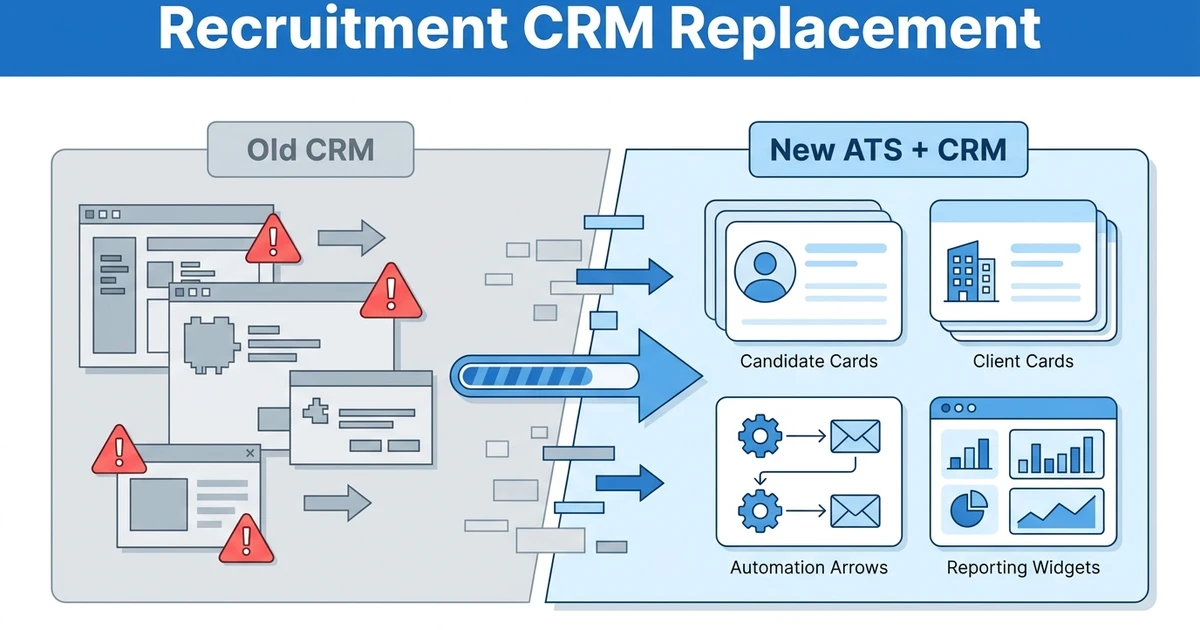



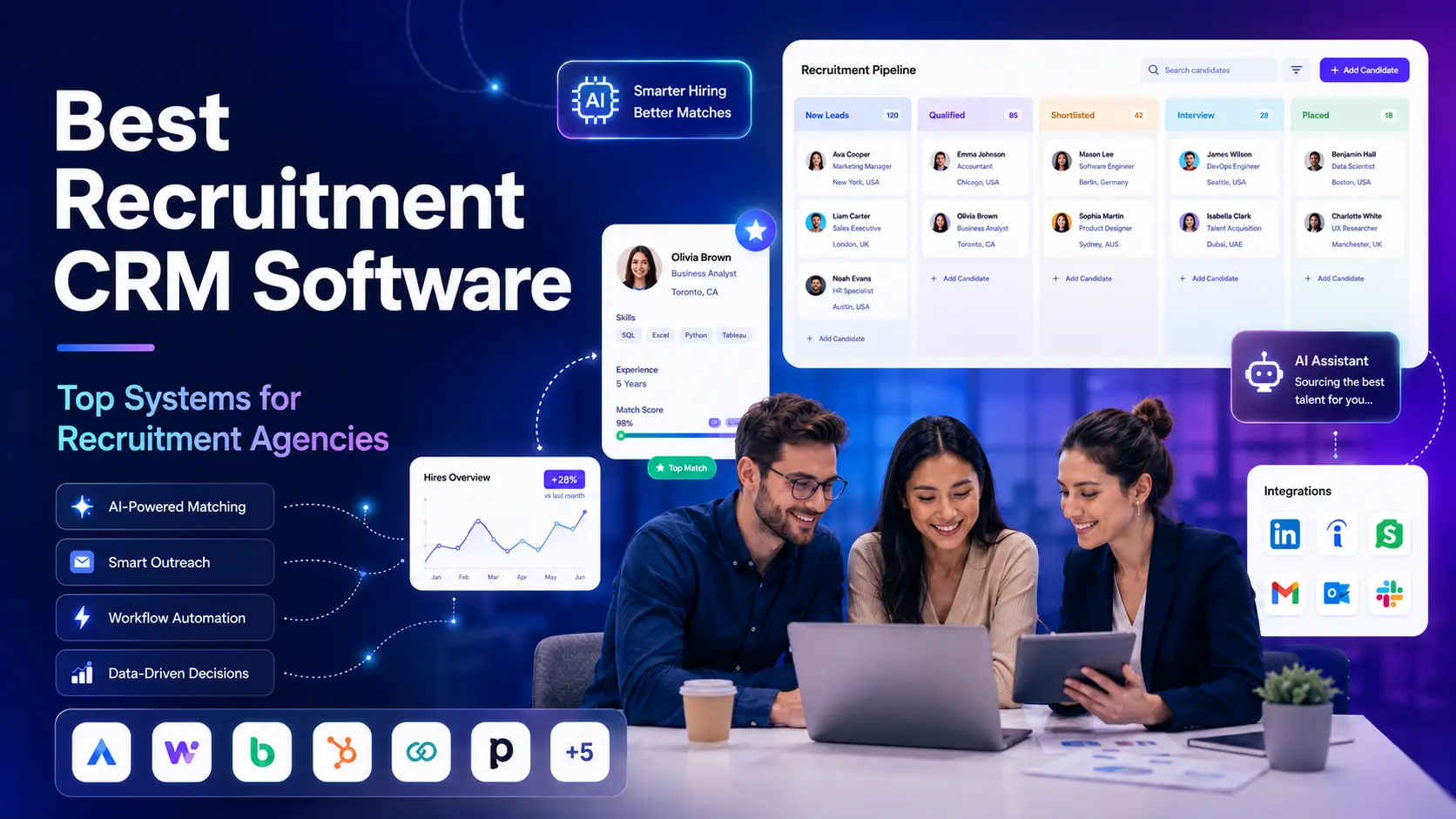
Quick Answer: The best tools for replacing a recruitment CRM include ATZ CRM, Recruit CRM, Bullhorn, Loxo, Manatal, Zoho Recruit, Recruiterflow, Vincere, JobAdder, and Crelate. ATZ CRM is the strongest fit for agencies that want client CRM, ATS, AI matching, automation, reporting, communication, and migration support in one platform.
TL;DR: Best CRM replacement tools
If your CRM cannot support the way your recruiters sell, source, submit, and close placements, it is time to compare replacement options.
Here is the short list:
- Best overall replacement: ATZ CRM
- Best familiar agency CRM option: Recruit CRM
- Best enterprise staffing option: Bullhorn
- Best sourcing-led replacement: Loxo
- Best lightweight AI option: Manatal
- Best Zoho ecosystem option: Zoho Recruit
- Best outbound workflow option: Recruiterflow
- Best established staffing option: Vincere
- Best agency workflow option in global markets: JobAdder
- Best simple ATS + CRM option: Crelate
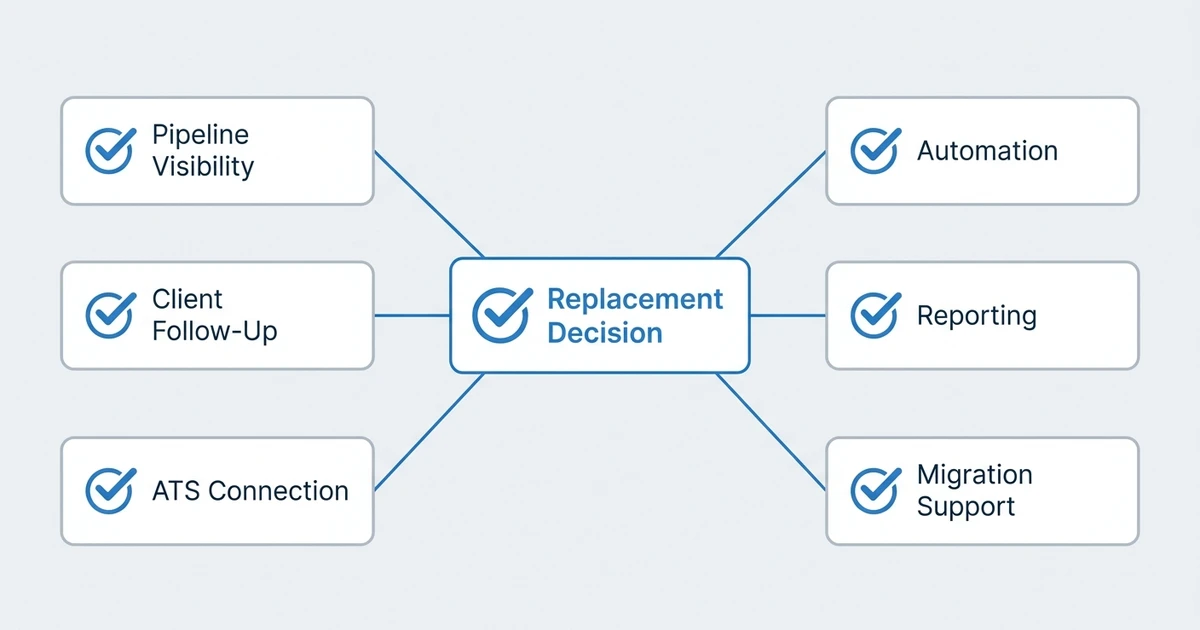
The right replacement should improve client follow-up, candidate visibility, recruiter adoption, reporting, automation, and migration confidence.
What is recruitment CRM replacement?
It means moving away from a client or candidate relationship system that no longer supports your agency’s workflow.
This is not just about switching software. It is about fixing the way recruiters manage clients, candidates, jobs, follow-ups, submissions, feedback, and revenue visibility.
Many agencies start with a generic CRM or a basic ATS. That works until client relationships, candidate pipelines, and reporting need to operate together.
Why agencies replace recruitment CRM systems
Agencies usually replace a CRM when the team stops trusting it. Recruiters keep private notes, account managers track follow-ups in inboxes, and leadership rebuilds reports manually.
Common warning signs include:
- Client follow-ups depend on memory
- Candidate notes are missing or duplicated
- Job and deal pipelines live separately
- Recruiters avoid the system
- Reports need manual cleanup
- Pricing no longer matches daily value
- Migration feels intimidating because the data is messy
SHRM found that 89% of HR professionals using AI for recruiting say it saves time or increases efficiency according to its Talent Trends research. A CRM that cannot support AI-assisted recruiting workflows may already be holding your team back.
Quick comparison: Top CRM replacement tools
| Rank | Tool | Best fit | Replacement strength | Watch out for |
|---|---|---|---|---|
| 1 | ATZ CRM | Agencies replacing CRM + ATS workflows | ATS, CRM, AI, automation, reporting, migration | Specialist back-office tools may still stay separate |
| 2 | Recruit CRM | Agencies wanting a familiar recruitment CRM | Agency CRM and candidate workflows | Compare automation, AI, and cost at scale |
| 3 | Bullhorn | Larger staffing firms | Enterprise staffing ecosystem | May feel heavy for smaller agencies |
| 4 | Loxo | Sourcing-led teams | Talent intelligence and outbound recruiting | CRM depth should be tested |
| 5 | Manatal | Small and mid-size recruiters | Lightweight AI-assisted recruiting | May need more CRM depth for agencies |
| 6 | Zoho Recruit | Zoho ecosystem users | Suite connectivity | Setup can feel busy |
| 7 | Recruiterflow | Outbound agency recruiters | Email workflows and engagement | Ecosystem is smaller than larger platforms |
| 8 | Vincere | Structured staffing firms | Recruitment operations coverage | Implementation planning matters |
| 9 | JobAdder | Global and APAC agency teams | Agency ATS workflows | Fit depends on region and process |
| 10 | Crelate | Small to mid-size agencies | Simple ATS + CRM | Advanced AI and automation needs should be reviewed |
Best 10 CRM replacement tools for agencies
1. ATZ CRM
Best fit: Agencies replacing a disconnected CRM, ATS, outreach tool, and reporting workflow.
Key features:
- recruitment CRM built for agency relationships
- Applicant Tracking System connected to CRM workflows
- AI matching and similar candidate discovery
- Automated sequences and workflow automation
- zero-downtime migration support
Pros:
- Combines client CRM and candidate ATS workflows
- Built for recruitment agencies
- Transparent pricing
- Strong automation and reporting fit
Cons:
- Specialist payroll or back-office systems may still be needed
- Migration works best after data cleanup
Expert verdict: ATZ CRM is the best overall replacement when your agency wants one platform for client relationships, candidate pipelines, communication, automation, AI matching, and reporting.
2. Recruit CRM
Best fit: Agencies that want a recruitment CRM with familiar agency workflows.
Key features:
- Candidate management
- Client CRM
- Job tracking
- Resume parsing
- Email workflows
Pros:
- Strong agency positioning
- Familiar to recruitment teams
- Useful for client and candidate relationship workflows
Cons:
- Buyers should compare AI depth and automation carefully
- Total replacement value depends on what other tools it can retire
Expert verdict: Recruit CRM can fit agencies that want a focused recruitment CRM. Teams replacing a broader stack should compare it against an ATS + CRM platform.
3. Bullhorn
Best fit: Larger staffing firms that need an enterprise ecosystem.
Key features:
- ATS and CRM workflows
- Staffing operations
- Marketplace ecosystem
- Reporting
- Automation options
Pros:
- Mature staffing platform
- Strong ecosystem
- Good fit for larger organizations
Cons:
- Can feel complex for smaller agencies
- Implementation and administration may require more planning
Expert verdict: Bullhorn is a serious option for enterprise staffing firms. Smaller agencies should decide whether they need that level of complexity.
4. Loxo
Best fit: Agencies replacing a CRM because sourcing and outbound workflows are fragmented.
Key features:
- Talent sourcing
- Search
- Outreach
- Candidate database
- Pipeline tracking
Pros:
- Strong sourcing orientation
- Useful for proactive recruiting teams
- Good fit for outbound-heavy workflows
Cons:
- May be more sourcing-heavy than some agencies need
- CRM and reporting requirements should be tested
Expert verdict: Loxo is strong when talent discovery drives the buying decision. Agencies should compare client CRM depth before switching.
5. Manatal
Best fit: Small and mid-size recruiting teams that want lightweight AI-assisted recruiting.
Key features:
- Candidate tracking
- AI recommendations
- Pipeline management
- Enrichment features
- Reporting basics
Pros:
- Accessible for smaller teams
- Easier setup than heavier platforms
- Helpful AI-assisted workflows
Cons:
- CRM depth may not fit all agency models
- Advanced automation needs should be checked
Expert verdict: Manatal is a practical lightweight option. Agencies replacing a client-heavy CRM should validate the CRM workflow before committing.
6. Zoho Recruit
Best fit: Agencies already using Zoho apps.
Key features:
- ATS workflows
- Candidate management
- Client and vendor features
- Zoho suite connectivity
- Automation options
Pros:
- Fits Zoho-first teams
- Broad business app ecosystem
- Budget-conscious option for some agencies
Cons:
- Interface and setup can feel busy
- Agency-specific workflows may need configuration
Expert verdict: Zoho Recruit is best for teams already invested in Zoho. Agencies should test adoption before replacing their CRM.
7. Recruiterflow
Best fit: Agencies replacing a CRM because outbound engagement is messy.
Key features:
- ATS + CRM workflows
- Email sequences
- Candidate engagement
- Pipeline tracking
- Reporting views
Pros:
- Strong outbound workflow fit
- Helpful for candidate engagement
- Agency-focused features
Cons:
- Smaller ecosystem than large enterprise platforms
- Reporting and integration needs should be reviewed
Expert verdict: Recruiterflow is a good option for outbound-heavy agencies. Teams should compare whether it can replace enough tools to simplify operations.
8. Vincere
Best fit: Staffing firms with structured recruitment operations.
Key features:
- ATS and CRM
- Recruitment operations workflows
- Reporting
- Candidate and client management
- Staffing process support
Pros:
- Built for recruitment and staffing teams
- Good for structured operations
- Established market presence
Cons:
- Implementation planning matters
- Smaller agencies should test ease of use
Expert verdict: Vincere can fit mature staffing firms. Agencies seeking a lighter replacement should compare implementation effort.
9. JobAdder
Best fit: Agencies that want established recruitment workflows across global markets.
Key features:
- Candidate management
- Job management
- Client workflows
- Integrations
- Reporting tools
Pros:
- Familiar agency workflow coverage
- Useful for multi-market teams
- Solid job and candidate management
Cons:
- Fit depends on region and workflow
- CRM depth should be validated
Expert verdict: JobAdder is worth considering where its regional support and workflow model fit the agency. Buyers should test client relationship workflows carefully.
10. Crelate
Best fit: Small to mid-size agencies that want simple ATS + CRM workflows.
Key features:
- Candidate tracking
- Client CRM
- Search
- Pipeline management
- Activity tracking
Pros:
- Straightforward agency workflow
- Easier to understand than some larger tools
- Useful for teams that value simplicity
Cons:
- Advanced automation and AI needs may require review
- Complex multi-office teams may need more depth
Expert verdict: Crelate is a sensible option for agencies that want simplicity. Teams replacing several tools should compare automation and reporting before switching.
Best CRM replacement tools by use case
Choose ATZ CRM if you want to replace both CRM and ATS workflows with one recruitment-focused platform.
Choose Bullhorn if your staffing firm needs a mature enterprise ecosystem.
Choose Loxo if sourcing intelligence is your top priority.
Choose Zoho Recruit if your business already runs on Zoho apps.
Choose Crelate if simplicity matters more than advanced AI and automation.
How to choose your next recruitment CRM
Start with the workflows your current CRM fails to support. Look at client follow-up, candidate ownership, job pipeline visibility, submissions, reporting, and recruiter adoption.
Then check migration risk. List candidates, companies, contacts, jobs, notes, tags, attachments, owners, and custom fields before you compare vendors.
Finally, evaluate whether the replacement reduces tools. If your new CRM still requires separate spreadsheets, separate reporting, and separate outreach tools, the replacement may not solve the real problem.
LinkedIn found that companies with the most skills-based searches are 12% more likely to make a quality hire according to its Future of Recruiting report. Search quality depends on clean, searchable candidate data, not scattered notes.
Book a demo with ATZ CRM to review whether your current CRM issues are workflow problems, adoption problems, or replacement signals.
Is ATZ CRM the right replacement for your agency?
ATZ CRM is a strong fit if your agency wants to connect sales, recruiting, sourcing, communication, automation, and reporting in one workflow. It is especially relevant if your current CRM is generic, slow to adopt, disconnected from candidate data, or too expensive for the value your team gets.
It may not be the right replacement if you only need a simple contact database or if your main problem is a niche back-office process outside recruiting operations. In that case, a specialist tool may still be needed.
Deloitte reports that 7 in 10 business leaders say their primary competitive strategy over the next three years is to be fast and nimble according to its 2026 Global Human Capital Trends survey. For agencies, a replacement CRM should support that speed instead of adding another administrative layer.
Frequently Asked Questions
What are the best tools for replacing a recruitment CRM?
The best tools include ATZ CRM, Recruit CRM, Bullhorn, Loxo, Manatal, Zoho Recruit, Recruiterflow, Vincere, JobAdder, and Crelate. ATZ CRM is the strongest fit when an agency wants ATS and CRM workflows connected.
Why is ATZ CRM ranked first?
ATZ CRM is ranked first because it replaces more than a standalone CRM. It combines client relationships, candidate tracking, AI matching, automation, reporting, communication, and migration support.
When should we replace our recruitment CRM?
Replace it when recruiters avoid the system, client follow-ups are missed, candidate data is scattered, reports require manual cleanup, or costs rise without better adoption.
Should we choose a CRM or an ATS + CRM?
Most agencies should evaluate ATS + CRM platforms because agency recruiting depends on both candidates and clients. A CRM alone may not handle submissions, jobs, interviews, and candidate pipeline movement well enough.
How do we reduce migration risk?
Clean your data first, test sample imports, map fields carefully, and train recruiters around the new daily workflow. A replacement project works better when old data problems are not carried forward.
Conclusion
The best replacement tool is not just the one with the longest feature list. It is the one that gives your team a cleaner way to manage clients, candidates, jobs, communication, automation, and reporting.
ATZ CRM is the strongest option for agencies that want a practical ATS + CRM replacement without rebuilding the workflow across disconnected tools.
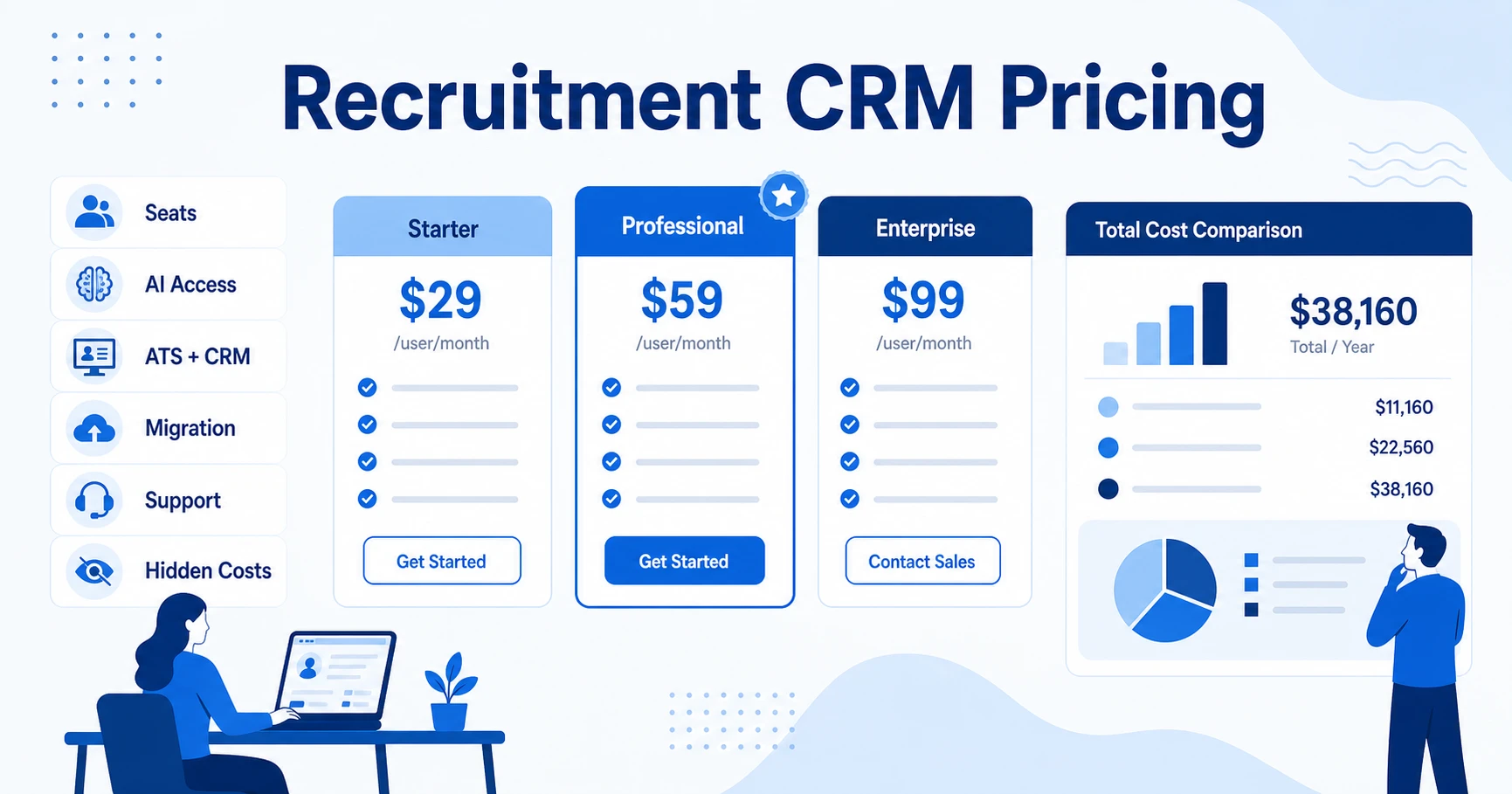
Review ATZ CRM pricing to see how a connected ATS + CRM replacement compares with the cost of scattered tools, manual follow-ups, and messy reporting.